Service Dogs for Veterans in Delaware
This page explains the law in general terms. It is not legal advice. For a specific situation, contact the agency listed on this site or an attorney.
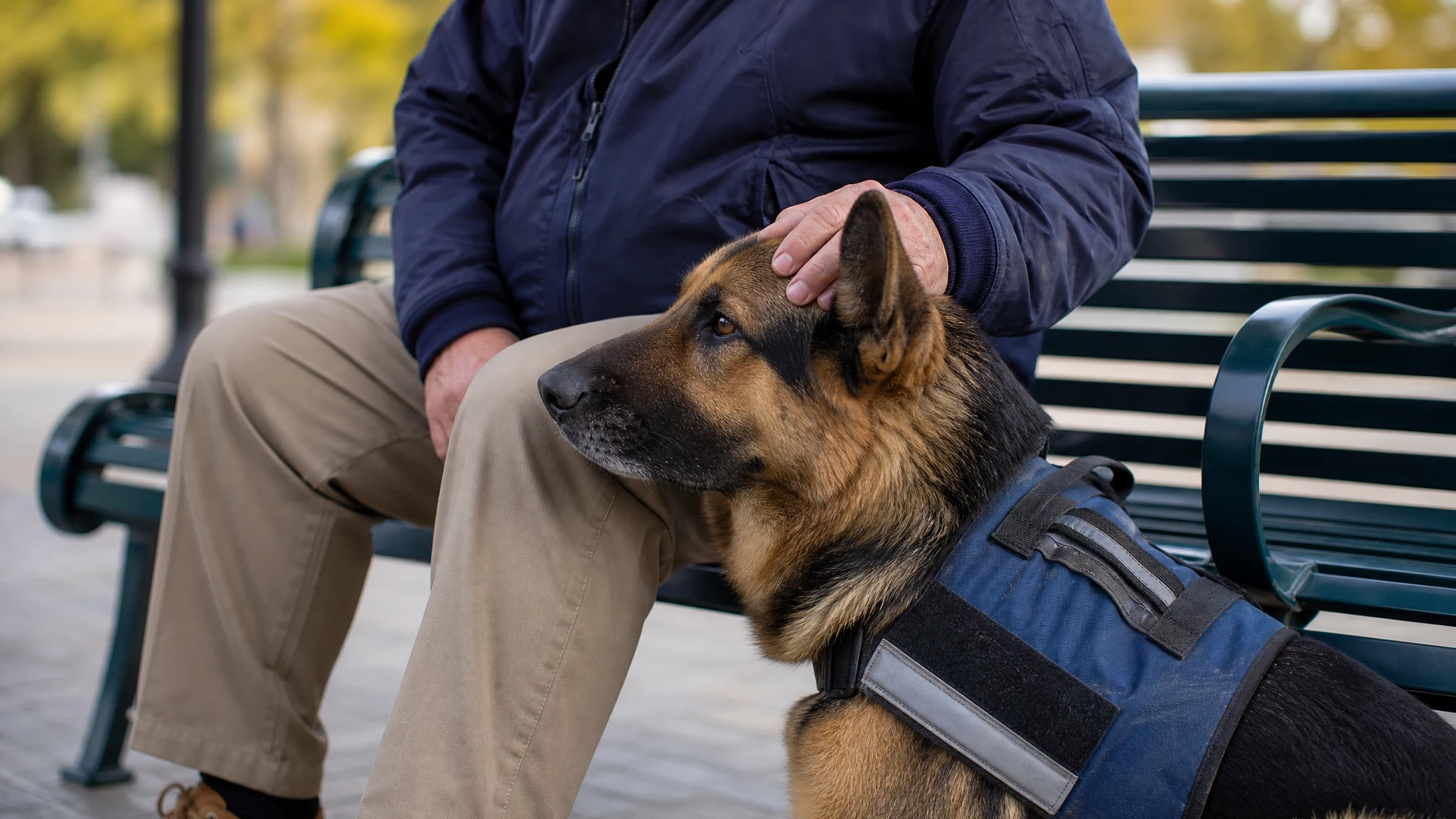
Service dogs for veterans can help with tasks tied to a disability, including post-traumatic stress disorder (PTSD), traumatic brain injury and mobility limits. This guide walks through how a veteran in Delaware can look into a PTSD service dog, which organizations are named in official and public sources, what the VA says about its service dog benefit, and what Delaware and federal law say about access.
No step here promises a placement or a particular outcome. Programs set their own rules, and waits can be long.
What You Need Before You Start
Gather these items first. Each program will tell you exactly what it requires, so treat this as a starting kit.
- Your discharge paperwork (such as a DD-214) and any VA benefit information you have.
- Medical or mental health records that describe your condition and how it affects daily life.
- A list of the specific tasks a dog could do for you, written in your own words.
- A calendar and budget for travel, since several programs are outside Delaware.
- Details about your home, such as who lives there, other pets and your landlord's rules.
First, Know What Counts as a Service Dog
The ADA.gov Service Animals FAQ says a service animal is a dog individually trained to do work or perform tasks for an individual with a disability. Delaware's Equal Accommodations Law (6 Del. C. s. 4502) uses a similar definition. It names dogs only, and it states that the disability can be psychiatric, intellectual or another mental disability.
This matters for PTSD. A dog trained to wake a veteran from a nightmare, interrupt a panic response or create space in a crowd is doing trained tasks. Those are the kinds of tasks that separate a service dog from other animals.
PTSD Service Dog Versus Emotional Support Animal
Emotional support, therapy and comfort animals are not service animals under the ADA. A pet that calms you by being near you is valuable, but comfort alone is not a trained task. The difference is individual training to do work or perform tasks.
There is also no official service dog registry or required certification under the ADA. A certificate, ID card or online registration is not legal proof of anything. Do not pay a website that offers one. The ADA.gov FAQ does not require such papers.
Step-by-Step: How to Pursue a Service Dog as a Delaware Veteran
Step 1. Talk with your care team about whether a service dog fits
Start with the clinicians who know your health. Ask whether a service dog could support your treatment and what tasks would help. Ask for any records a program might want. A dog is not a replacement for care, and it is a big daily commitment.
Step 2. Write down the tasks you need
Be concrete. Examples include alerting to a rising anxiety response, turning on lights in a dark room, or standing between you and other people. This list helps you compare programs and, later, answer questions about your dog.
Step 3. Look at the Delaware option first
The Vietnam Veterans of America article on Canines Assisting Service Heroes (C.A.S.H.) describes a Delaware program run by VVA Kent County Chapter 850. It provides trained service dogs to disabled veterans with PTSD or traumatic brain injury. The article says the training is done by Nelson Miller of Riedel K9 and puts the cost at about $10,000 per dog. It does not say who pays that cost, and it does not give a wait time.
Because the program is based in the Dover area of Kent County, it is a natural first call for a veteran seeking a PTSD service dog in Delaware. Contact the chapter through the VVA to ask about eligibility, costs, wait times and current availability. Do not assume the details are unchanged since the article was written.
Step 4. Compare accredited out-of-state programs
I could not confirm an Assistance Dogs International (ADI) accredited program based in Delaware. Several nearby or national organizations publish their own information. Read each page closely, because most do not state a Delaware service area.
| Organization | Location | What the organization says |
|---|---|---|
| Canine Companions | Nationwide, with a Northeast Training Center listed | ADI accredited. Its site says, "Every service and facility dog is free to those we serve." It serves veterans among others. Check wait times with the organization. |
| Warrior Canine Connection | Boyds, Maryland | ADI accredited. Serves veterans and service members with PTSD, TBI or physical disability. No fee for the dog and training. Applicants cover their own travel to a team training camp in Maryland that lasts at least 8 days. It says the average wait aligns with the industry's average of about two years. Its service area is not stated, so ask whether Delaware applicants are accepted. |
| Canine Partners for Life | Cochranville, Pennsylvania | ADI accredited. Dogs and services are offered at no cost. Recipients attend about 2.5 weeks of onsite training in Cochranville and may have travel expenses. Its FAQ page says the waiting list for service dogs is currently closed. It does not state a Delaware service area. |
| Amazing Tails | Oxford, Pennsylvania | A nonprofit listed as training assistance dogs. Costs and wait times are not published in the source I have, so ask the organization directly. It does not state a Delaware service area. |
For each program, ask the same questions: Do you place dogs with veterans who live in Delaware? What does the dog cost, and who pays? How long is the wait? What does the training stay look like? What follow-up support do you offer?
Step 5. Understand the VA service dog benefit
The VA's Prosthetic and Sensory Aids Service describes a Service and Guide Dog benefit under 38 CFR 17.148. It is for veterans prescribed a guide or service dog because of a visual, hearing or substantial mobility impairment. According to the VA page:
- The VA pays for veterinary insurance, hardware and repairs, and travel to obtain a dog.
- The VA does not provide the dogs themselves.
- Veterans are referred to organizations accredited by ADI or the International Guide Dog Federation (IGDF).
- Veterans must supply a training completion certificate.
The page describes the benefit in terms of visual, hearing and mobility impairments. If your main need is PTSD, ask your VA care team or the Prosthetic and Sensory Aids Service whether and how the benefit applies to you. Do not assume it does.
The Delaware Office of Veterans Services helps veterans and families reach earned benefits such as disability compensation, employment and housing. Its mission page lists no service dog program. Still, it can be a useful contact for benefits questions. The Dover office is at 802 Silver Lake Blvd, Robbins Building, Suite 100, and the phone number is (302) 739-2792.
The Wilmington VA Medical Center page I reviewed lists no service dog program, so ask the VA directly about local services.
Step 6. Apply and keep records
Each program has its own application. Expect to submit personal information, records, a description of your needs and details about your home. Keep copies of everything you send, note dates of every call, and write down who told you what. If a program has a waiting list, ask how it communicates with applicants while they wait.
Step 7. Prepare for training and travel
Several programs ask recipients to attend a multi-day or multi-week stay at the training site. Plan time off, transportation and care for your household. Ask each program about costs you would cover yourself.
Step 8. Keep training humane
Reliable service dog work is built on reward-based methods, in line with the American Veterinary Society of Animal Behavior (AVSAB). Reward the behavior you want. Avoid shock, prong or choke collars, alpha rolls, scruffing and dominance methods. They can damage trust and make anxious behavior worse, which works against the calm, steady partner you need.
Your Rights With a Service Dog in Delaware
Public places
Under Delaware's Equal Accommodations Law (6 Del. C. s. 4504(a)(3)), a place of public accommodation must permit an individual with a disability accompanied by a service animal. The same section also requires public accommodations to permit an individual who is training a service animal to be used by persons with disabilities, accompanied by the animal. The text I reviewed states no age, harness or ID condition, and it does not limit this to professional trainers. Confirm the details with the Division of Human and Civil Rights if you are unsure.
Guide dog users have separate protections under Delaware's White Cane Law (16 Del. C. ch. 95). There is no extra charge for the guide dog, the handler is liable for damage, and the dog may be excluded only where its admission would create a clear danger of disturbance or physical harm to others.
The two questions staff may ask
The ADA.gov Service Animals FAQ says that when the need is not obvious, staff may ask only two things: (1) is the dog a service animal required because of a disability, and (2) what work or task has the dog been trained to perform? Staff cannot ask for papers as a condition of entry. Practice a short, calm answer to the second question using your task list from Step 2.
Housing
Delaware fair housing law (6 Del. C. s. 4603A) treats a refusal of reasonable accommodations in rules, policies, practices or services as discrimination when the accommodation is needed for a person with a disability to use a dwelling. No Delaware fair housing text I opened names assistance animals. For federal housing rules, check with the U.S. Department of Housing and Urban Development (HUD). For Delaware, check with the Division of Human and Civil Rights.
Misrepresentation and other points
I did not find a Delaware penalty for misrepresenting a pet as a service dog. A 2024 bill, SB 219, would have created one but did not become law. For employment questions and any state ID program, I found nothing to report, so check with the relevant agency. Delaware law also addresses unauthorized acts against a service dog at 16 Del. C. s. 3056F.
If you are denied access
The Delaware Division of Human and Civil Rights accepts Equal Accommodations complaints through an online form. The deadline is 180 days from the incident, so note the date, place and names right away. This article states the law and is not legal advice.
Tips and Common Mistakes
- Paying for a registry or ID card. There is no official registry or certification under the ADA, and such products are not legal proof.
- Assuming a program serves Delaware. Several organizations do not state a service area. Ask first.
- Mixing up the dog types. An emotional support animal is not a service animal under the ADA. Do not describe one as a service dog.
- Counting on the VA to supply a dog. The VA page says it does not provide dogs.
- Ignoring costs. The C.A.S.H. article cites about $10,000 per dog without saying who pays. Others charge nothing for the dog but expect you to cover travel.
- Skipping the wait. One program says its average wait aligns with about two years, and another has a closed list. Apply broadly and keep records.
- Using harsh training tools. Stick to reward-based methods.
What Results to Expect
Many veterans report that a well-matched, well-trained dog can make daily routines feel more manageable, and some find it easier to leave the house. Results vary from person to person and from dog to dog. A service dog is one part of a care plan and does not cure PTSD or any other condition. Plan for patience during the wait and for ongoing training after placement.
Sources
- ADA.gov Service Animals FAQ
- Delaware Code Online, Title 6 Chapter 45 (Equal Accommodations)
- Delaware Code Online, Title 16 Chapter 95 (White Cane Law)
- Delaware Code Online, Title 6 Chapter 46 (Fair Housing)
- Delaware Division of Human and Civil Rights, How to file a complaint
- Vietnam Veterans of America, Canines Assisting Service Heroes
- VA Prosthetic and Sensory Aids Service, Service and Guide Dogs
- Delaware Office of Veterans Services
- Canine Companions
- Warrior Canine Connection
- Canine Partners for Life